The Website Builder Era Is Over
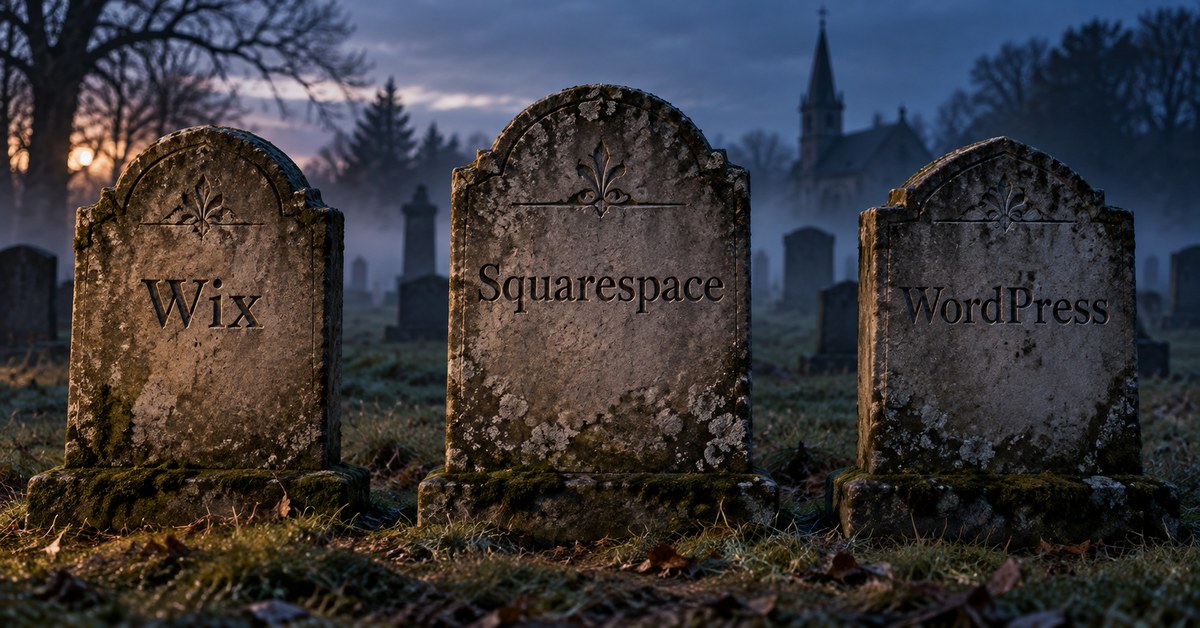
Wix, Squarespace and template-driven WordPress builds have had a good run selling businesses the same compromise: pick a layout, work around its limits, and call it your website. That bargain is getting harder to defend. Your business deserves a site built around how it works.
A quick launch and a polished homepage tell you very little about whether the site can do the work you need. Choosing a platform before defining that work is an outdated approach.
Custom development deserves a current comparison. The old assumption that a smaller business must settle for a template needs to earn its place in the proposal.
A nicer template will not fix a weak business process
A visitor needs a quote. Your form asks for a name, an email address and a message. Someone on your team then emails back to collect the details needed to price the job.
The website has passed the work along. It has done very little to help.
Change the font. Add an animation. Buy a different theme. The same gap remains.
A useful website can explain what information matters and collect it in a form your team can use. For some businesses, that means a guided quote request. For others, it means checking service eligibility before asking someone to book.
These decisions should shape the build from the beginning. Treating them as extras after the design is finished puts the business in second place.
The cheap website can leave you with expensive work
The monthly subscription is easy to see. The time spent fixing an incomplete inquiry is harder to notice.
Think about a commercial printer. This is an illustrative example, not a client result. A customer requests a price but leaves out the paper stock and finishing requirements. An employee starts another email exchange. The quote waits.
If that happens regularly, the website's low launch price tells an incomplete story.
A purpose-built request flow could ask the relevant questions as the customer goes. It could flag incompatible choices and send a usable specification to the estimator. You would still need to test it with real customers and maintain the rules.
Count the work left behind by the website. A platform fee does not cover the hours your team spends compensating for an awkward process.
When comparing proposals, ask:
- What will staff still need to re-enter or chase down?
- Which customer requirements does the proposed solution actually handle?
- What will it cost to change that process later?
- Who fixes it when a connected service stops working?
A low price can be a good deal. It can also be the price of leaving the difficult work untouched.
Custom development deserves a fresh quote
Custom websites still get dismissed as if every feature must be built from scratch. That assumption needs updating.
Frameworks supply reusable foundations. The Next.js documentation, for example, describes application features and tooling that developers can use without recreating the underlying setup for each project.
That leaves more of the project focused on the work specific to your business.
AI-assisted development may help with parts of that work too. It does not make design judgment or testing optional. METR's research update explains the uncertainty involved in measuring productivity gains. A promise that AI makes every custom build cheap should make you suspicious.
Get a current proposal for a defined requirement. Compare it with what you would actually spend making the builder fit. An old assumption about custom pricing is a poor reason to accept a process that does not work.
WordPress flexibility does not excuse a lazy WordPress build
WordPress can support custom themes, plugins and application development. Its feature documentation makes that clear. Calling every WordPress site technically limited would be wrong.
That does not give a template-led proposal a free pass.
If an agency recommends WordPress, ask why it fits the work. Ask them to demonstrate the hardest part of your customer journey. A theme demo is not that demonstration.
Apply the same scrutiny to Wix and Squarespace. A familiar platform name does not prove that a proposed implementation will meet your requirements. Nor does the word "custom" prove that a developer has designed a good system.
Our criticism is direct: choosing the platform first and fitting the business around it is backward. The platform's capabilities do not excuse that decision.
Make the proposal prove its value
Ask competing providers to price the same workflow. Otherwise, you may be comparing a brochure with a working intake system and wondering why the numbers differ.
| What to compare | What you need to see |
|---|---|
| Customer journey | The actual steps from the visitor's question to a useful next action |
| Staff workload | What arrives with the inquiry and what still needs manual handling |
| Ongoing costs | Hosting, paid extensions and maintenance responsibilities |
| Future changes | How a new requirement gets built and who can maintain it |
Keep the demonstration practical. Give the provider an unusual request. Ask what happens when the customer does not know an answer. See whether staff can update a rule without breaking the process.
This is where an attractive mockup stops being enough.
Our article on outgrowing off-the-shelf software explores similar problems inside a business. The website deserves the same scrutiny.
A basic site can be enough. Be honest about the requirement.
A simple informational site may need little more than clear content and dependable editing. Buying a custom application for that job can waste money.
But once the website is expected to handle a distinctive process, "the template doesn't do that" is a weak answer. You can examine a custom component or replace the part that holds you back. You do not necessarily have to rebuild everything.
Wix, Squarespace and WordPress templates made it easier to get online. That achievement does not make a template-first build the right choice for your business today.
Before signing another website proposal, write down the work the site needs to do. Have the provider show you how it will do it.
Your business requirements should decide the website. The template should not.
Recommended next reads
Based on what this session has been reading, these are the strongest follow-up resources from here.